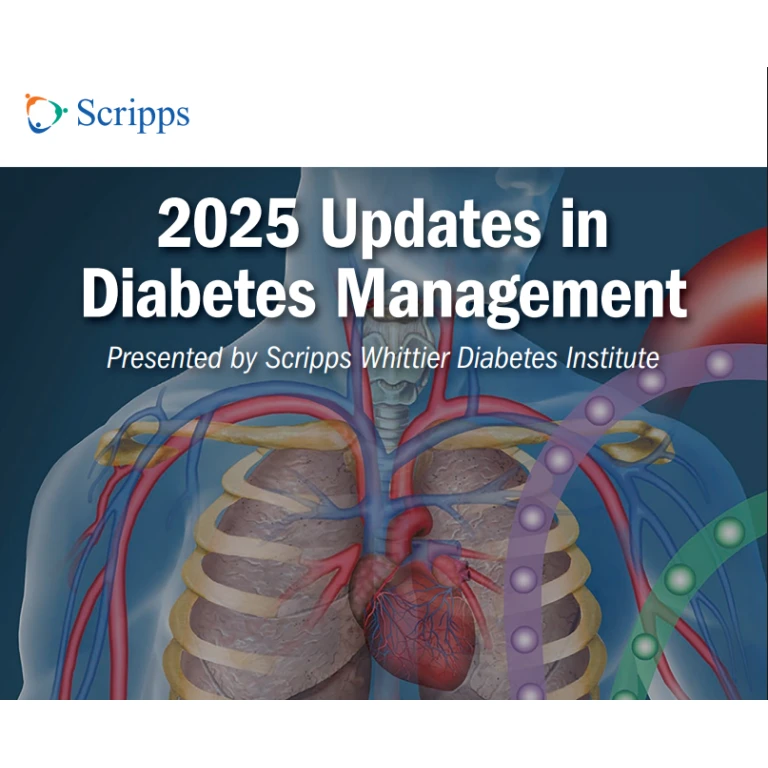
Scripps Updates in Diabetes Management 2025
20 Videos
Date septemebr 27 2025
Conference Overview
The Scripps Whittier Diabetes Institute – 2025 Updates in Diabetes Management program highlights the latest advances in the diagnosis and treatment of type 1 and type 2 diabetes. This comprehensive program covers recent developments in pharmacologic therapies, nutrition, surgical interventions, and diabetes technology.
The course is led by renowned experts who are actively involved in patient care and clinical research related to diabetes management. Participants will gain practical, evidence-based insights that can be directly applied in clinical practice, with the ultimate goal of improving outcomes and quality of life for patients living with diabetes.
Educational Objectives
After participating in this activity, learners will be able to:
-
Outline key considerations and precautions when managing diabetes in patients with coexisting renal and/or cardiovascular disease.
-
Demonstrate the effective use of glucose monitoring technologies to accurately track and manage blood glucose levels.
-
Evaluate evidence-based weight management strategies, including dietary interventions, pharmacologic therapies, and surgical options.
-
Apply updated clinical practice recommendations for diabetes management from both primary care and specialty perspectives.
-
Identify and address health disparities that may negatively impact diabetes care during clinical encounters.
Target Audience
This program is designed for:
-
Primary Care Physicians
-
Physician Assistants
-
Nurse Practitioners
-
Pharmacists
-
Certified Diabetes Educators
-
Dietitians
-
Other Allied Health Professionals
2025 Updates in Diabetes Management – Video Runtime
| No. | Topic | Runtime |
|---|---|---|
| 1 | Testosterone and DHEA in Female Genitourinary Syndrome of Menopause: Indications and Off-Label Approaches | 24:39 |
| 2 | Diabetes Management: How Remote Patient Monitoring and CGM are Reshaping Chronic Care | 05:47 |
| 3 | Remote Patient Monitoring and AI: Addressing Ethical and Legal Concerns in Clinical Care | 19:57 |
| 4 | Diabetes Technology 2025: Optimizing CGM and Automated Insulin Delivery for Diverse Populations | 33:08 |
| 5 | Diabetes Hospital Discharge: Keys to Ensuring Safe Transitions to Home Care | 21:00 |
| 6 | Adjunct Therapies in Type 1 Diabetes: GLP-1 Agonists and SGLT2 Inhibitors—Safety, Efficacy, and Protocols | 12:57 |
| 7 | T1D Patient Perspective: Navigating Insulin Pump Therapy, CGM, and Daily Challenges | 17:31 |
| 8 | CATALYST Study: Should We Routinely Screen for Hypercortisolism in T2D? | 15:41 |
| 9 | Sexual Dysfunction in Diabetes: Testosterone, Genital Anatomy, and Management Approaches | 28:41 |
| 10 | Steatotic Liver Disease (MASH): New Nomenclature, Noninvasive Diagnostics, and 2025 Therapeutic Approvals | 10:39 |
| 11 | GLP-1 and SGLT2 Use in Low BMI Patients: Cardiometabolic and Heart Failure Considerations | 20:17 |
| 12 | GLP-1 Receptor Agonists in Cardiometabolic Disease: Prevention and Management of CVD in 2025 | 17:19 |
| 13 | SGLT2 Inhibitors in T2D and CVD: Landmark Trials and Clinical Recommendations | 25:26 |
| 14 | T2D and CKD: Optimizing Cardiorenal Protection With SGLT2i, GLP-1 RA, and Combination Therapy | 25:22 |
| 15 | GLP1 Receptor Agonists in T2D: Practical Insights on Orals, Injectables, and New Evidence | 13:21 |
| 16 | Plant-Based Protein in T2D: ADA Recommendations for Diabetes Prevention and Management | 17:35 |
| 17 | The Power of Psych: A Tale of 3 Studies | 15:02 |
| 18 | Type 2 Diabetes in Adolescents: 2025 ADA Standards for Screening, Diagnosis, and Management | 15:44 |
| 19 | Geriatric Diabetes: Individualizing A1C Targets and Therapy Selection in Older Adults | 15:43 |
| 20 | Obesity in T2D: New ADA Standards Emphasize Person-First Care and Weight Bias | 07:40 |