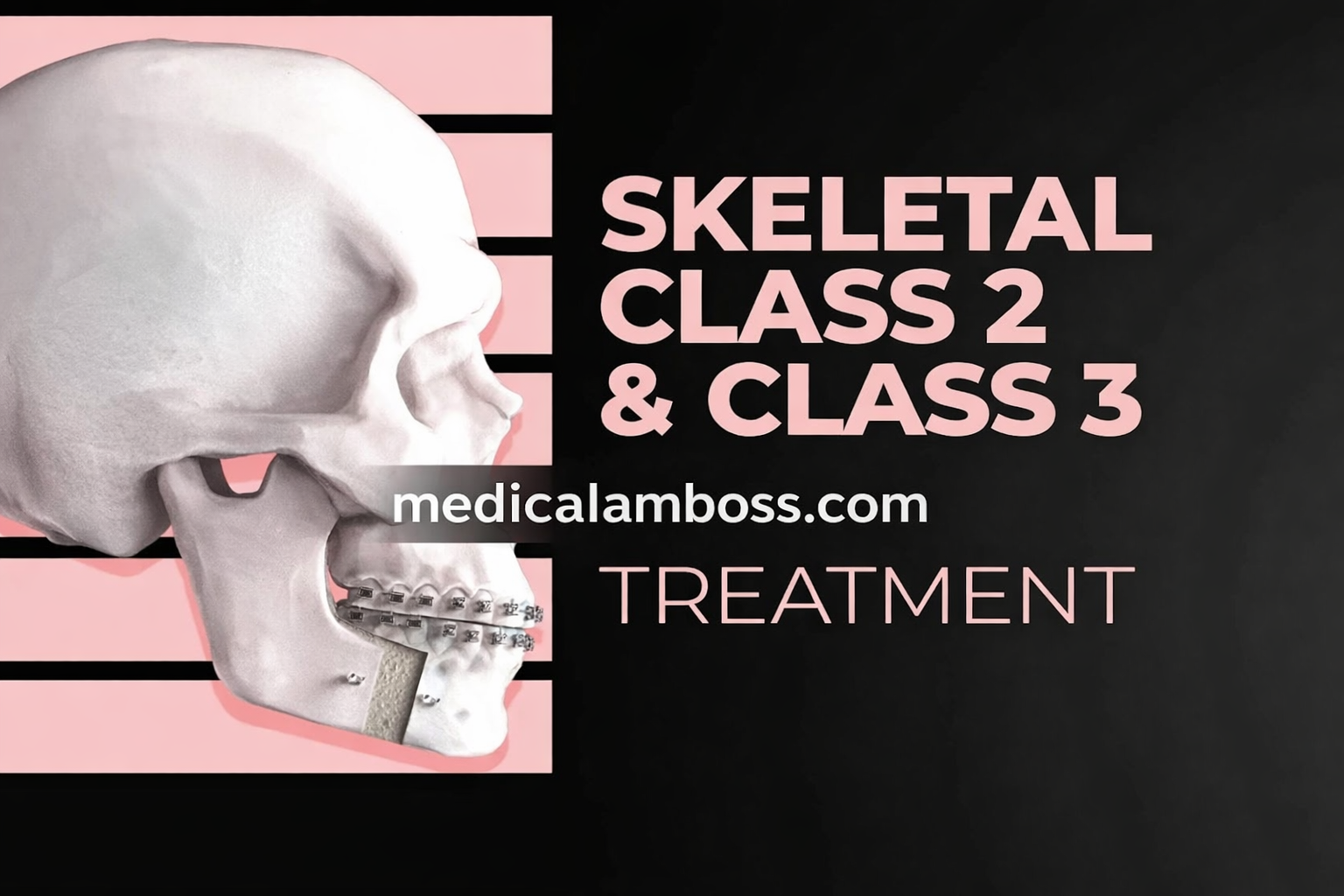
OHI-S Skeletal Class 2 & Class 3 treatment team approach orthodontist-surgeon
$40.00
This Product is shared via google drive download link, So please share your correct Gmail id while placing the order .Please note that there are no CME points or certificate associated with this course Samples for Courses Can be found here : Free Samples Here!
Include: 8 videos + 8 audios + 8 file sub vtt, size: 819 MB
OHI-S Skeletal Class 2 & Class 3 treatment team approach orthodontist-surgeon
Include: 8 videos + 8 audios + 8 file sub vtt, size: 819 MB
Target Audience: orthodontists, oral and maxillofacial surgeons
Information:
7 lessons + 1 free (3h 54min)
Skeletal Class 2 & Class 3 treatment by an “orthodontist-surgeon” team in accordance with the protocols of a world-famous professor of orthodontics, Dr. Alexandre Bottrel.
During the training, you will learn to:
- OHI-S Skeletal Class 2 & Class 3 treatment team approach orthodontist-surgeon diagnose skeletal malocclusion
- plan orthognathic surgery
- communicate between surgeon and orthodontist
- treat class 2
- treat class 3.
The OHI‑S Skeletal Class II & Class III Treatment – Team Approach (Orthodontist–Surgeon) program is best for orthodontists, oral & maxillofacial surgeons, and interdisciplinary dental teams who want structured, training in managing severe skeletal malocclusions through combined orthodontic and surgical protocols. It emphasizes evidence‑based collaboration to achieve functional stability, facial harmony, and long‑term success in complex cases.
Who Should Enroll
- Orthodontists treating patients with severe skeletal Class II or Class III malocclusions requiring surgical correction.
- Oral & maxillofacial surgeons collaborating with orthodontists on orthognathic surgery planning and execution.
- Prosthodontists & restorative dentists involved in rehabilitating occlusion after surgical‑orthodontic treatment.
- Residents & fellows in orthodontics or oral surgery seeking advanced interdisciplinary training.
- Dental technicians supporting appliance fabrication and surgical splint design.
What You’ll Learn
- Diagnosis & case selection: identifying skeletal Class II and Class III cases that require surgical intervention.
- Treatment planning protocols: sequencing orthodontic and surgical steps for predictable outcomes.
- Orthognathic surgery integration: surgical techniques and orthodontic preparation for Class II and Class III correction.
- Interdisciplinary collaboration: communication between orthodontist, surgeon, and restorative team.
- Functional & aesthetic outcomes: ensuring occlusal stability, facial balance, and patient satisfaction.
- Case‑based lessons: real examples of orthodontic–surgical teamwork in skeletal malocclusion treatment.
Topics:
Lesson 1.Skeletal problems in Orthodontics and How to Diagnose Them
- CBCT in diagnosis
- Sonography
- Cast models analysis
- Development of the face
- Two-step surgery: advantages
- Class 2 deformities aetiology: genetic factors
- Best period for surgery
- Environment influence.
Recommended for: Orthodontists, Oral and maxillofacial surgeons.
Lesson 2.Diagnosis of surgical case
- Para functions problems
- Cephalometry
- Facial analysis:
- asymmetry
- vertical proportion
- profile analysis.
- Dental analysis:
- cast model analysis
- mouth scan
- X-ray and CBCT.
- Functional analysis:
- respiratory problems
- physiotherapy problems
- ATM problems psychological and social problems.
Recommended for: Orthodontists, Oral and maxillofacial surgeons.
Lesson 3.Orthodontic preparation with orthognathic surgery: objectives. Introductory lesson
- Communication between surgeon and orthodontist
- Orthognatic surgery: advantages
- Presurgical orthodontics: objectives.
Recommended for: Orthodontists, Oral and maxillofacial surgeons.
Lesson 4.Orthodontic preparation with orthognathic surgery: objectives
- Communication between surgeon and orthodontist
- Orthognatic surgery: advantages
- Presurgical orthodontics: objectives
- Surgeon considerations.
Recommended for: Orthodontists, Oral and maxillofacial surgeons.
Lesson 5.Presurgical orthodontics: diagnosis and protocols
- Movement required in presurgical orthodontics
- Cast model analysis:
- transversal discrepancies
- anterior occlusal interferences
- symmetric occlusal contacts and arch.
- Postoperative recommendations.
Recommended for: Orthodontists, Oral and maxillofacial surgeons.
Lesson 6.Traditional and surgery first concept in presurgical orthodontics
- Traditional concept: objectives
- Segmental surgery: recommendations
- Surgery first concept: indications and benefits
- Multidisciplinary approach to orthognathic surgery
- Limits and treatment goals
- Nuances of preparation for orthognathic cases
- Digital and analogic treatment planning.
Recommended for: Orthodontists, Oral and maxillofacial surgeons.
Lesson 7.Surgical treatment of class 2 malocclusion
- Class 2 with mandibular deficiency
- Mandibular advance with mentoplasty
- Retrognatism with hipermentalism treatment
- Metoplasty planning
- Retrognatism with masseter hypertrophy treatment
- Class 2 with mandibular deficiency
- Class 2 with maxillary protrusion
- Class 2 with vertical problems
- Class 2 with sleep apnea.
Recommended for: Orthodontists, Oral and maxillofacial surgeons.
Lesson 8.Surgical treatment of class 3 malocclusion
- Mandibular prognatism treatment
- Maxillary hypoplasia treatment
- Le For I osteotomy
- Class 3 Combinated cases treatment
- Nasal enlargement control.
Recommended for: Orthodontists, Oral and maxillofacial surgeons.
Related products
DENTAL
Anesthesiology & pain medicine