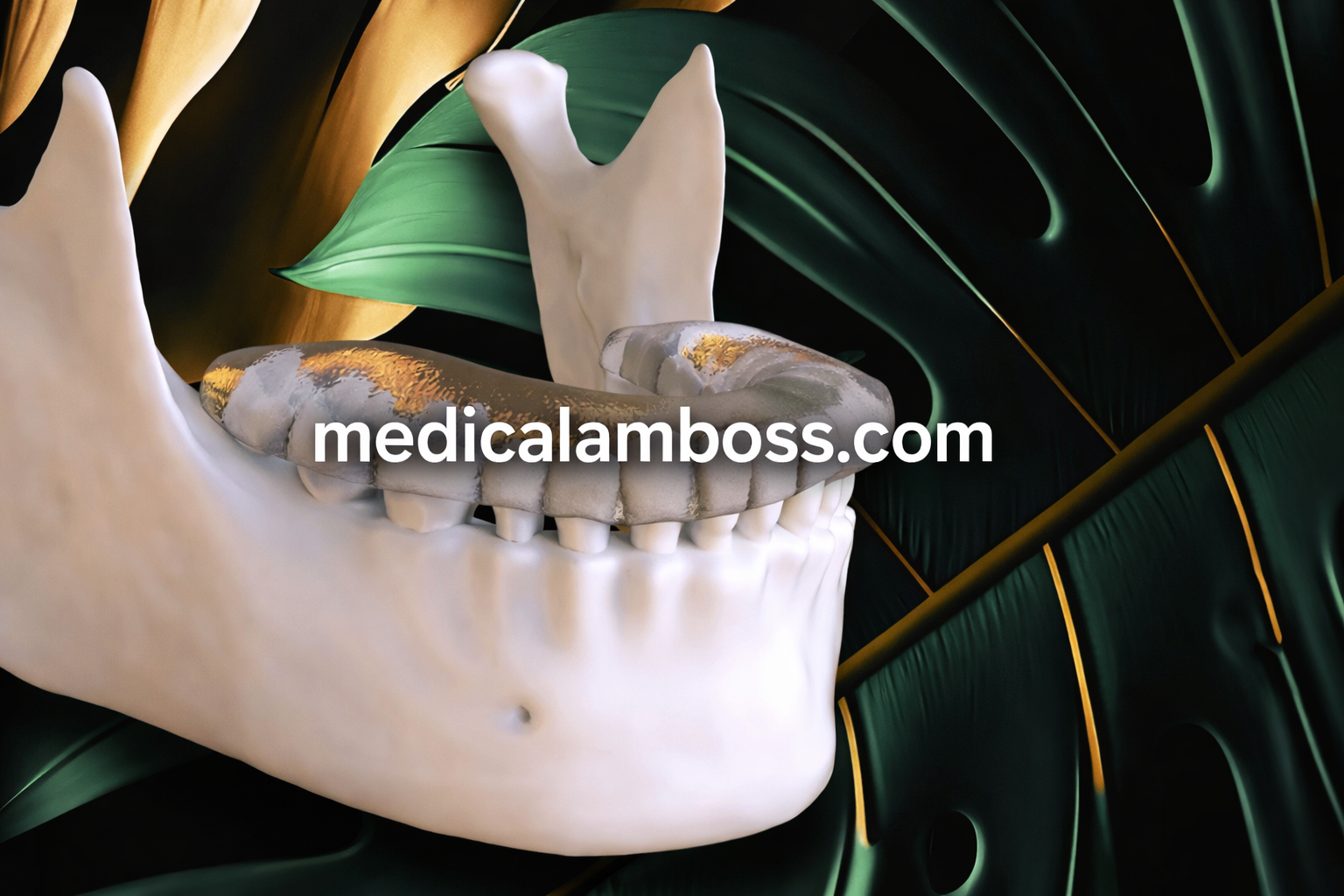
OHI-S Online congress on evidence-based temporomandibular disorders and bruxism treatment
$100.00
This Product is shared via google drive download link, So please share your correct Gmail id while placing the order .Please note that there are no CME points or certificate associated with this course Samples for Courses Can be found here : Free Samples Here!
Include: 16 videos + 16 audios + 16 file sub vtt, size: 7.4 GB
OHI-S Online congress on evidence-based temporomandibular disorders and bruxism treatment
Include: 16 videos + 16 audios + 16 file sub vtt, size: 7.4 GB
Target Audience: orthodontists, prosthodontists, functional dentists, general dentists
Information:
15 lessons + 1 free (12h 22min)
Protocols of the diagnosis and treatment of temporomandibular disorders and bruxism in an evidence-based concept presented by the leading expert Dr. Daniele Manfredini with Dr. Anna Colonna and Dr. Fabio Carboncini!
During the online congress you will learn:
- protocols of the diagnosis and treatment of temporomandibular disorders in an evidence-based concept
- protocols of the diagnosis and treatment of bruxism in an evidence-based concept
- prosthodontic management of bruxism.
The OHI‑S Online Congress on Evidence‑Based Temporomandibular Disorders (TMD) and Bruxism Treatment is best for dentists, prosthodontists, orthodontists, oral surgeons, and dental specialists who want structured, training in the diagnosis and management of TMD and bruxism using evidence‑based protocols. It emphasizes interdisciplinary approaches, functional stability, and patient comfort.
Who Should Attend
- General dentists & restorative dentists managing patients with occlusal dysfunction, bruxism, or jaw pain.
- Prosthodontists rehabilitating patients with worn dentition or occlusal instability due to bruxism.
- Orthodontists integrating TMD considerations into treatment planning and retention.
- Oral & maxillofacial surgeons treating advanced TMD cases requiring surgical intervention.
- Periodontists addressing occlusal trauma and its impact on periodontal health.
- Residents & fellows in prosthodontics, orthodontics, oral surgery, or restorative dentistry seeking advanced evidence‑based training.
- Dental technicians fabricating prostheses and splints that must harmonize with functional and neuromuscular principles.
What You’ll Learn
- Evidence‑based diagnosis: clinical protocols for identifying TMD and bruxism.
- Treatment strategies: splint therapy, occlusal adjustment, restorative approaches, and interdisciplinary care.
- Bruxism management: behavioral, mechanical, and restorative interventions.
- Functional stability: ensuring long‑term occlusal harmony and patient comfort.
- Case‑based lessons: real examples of TMD and bruxism treatment with long‑term outcomes.
+ Topics:
Lesson 1.Problems of diagnosis and treatment of temporomandibular disorders
- Psychological aspects of orofacial pain
- The interconnection between malocclusion and temporomandibular disorders
- Treatment of temporomandibular disorders: misuse of instrumental devices and ethical remarks
- Dogmas in functional dentistry: myths and facts
- Disadvantages of individually adjusted articulators
- Problems with the use of appliances for mandibular repositioning.
Recommended for: Orthodontists, Prosthodontists, Functional dentists, General dentists.
Lesson 2.Occlusal theories and dogmas
- Costen’s theories: influence on the development of dogmas in dentistry
- The obsolescence of the occlusal theories for TMD etiology and treatment
- Chronic pain: treatment tactics
- The relationship between anxiety, psychotype, and pain in temporomandibular disorders
- Occlusal interferences and bruxism: interconnection
- The biopsychosocial approach: challenges and their overcoming.
Recommended for: Orthodontists, Prosthodontists, Functional dentists, General dentists.
Lesson 3.Basics of temporomandibular disorders treatment. Introductory lesson
- Problems of using electronic devices for diagnosing temporomandibular disorders
- Principles of neuromuscular dentistry: myths and facts
- Occlusion and posture: interrelationship
- The latest news on bruxism and suggestions for future researches
- Principles of intraoral appliances
- Requirements for intraoral appliances
- OPPERA study.
Recommended for: Orthodontists, Prosthodontists, Functional dentists, General dentists.
Lesson 4.Basics of temporomandibular disorders treatment
- Problems of using electronic devices for diagnosing temporomandibular disorders
- Principles of neuromuscular dentistry: myths and facts
- Occlusion and posture: interrelationship
- The latest news on bruxism and suggestions for future researches
- Principles of intraoral appliances
- Requirements for intraoral appliances
- OPPERA study
- Mechanism of orofacial pain development
- Specifics of gathering medical history from patients with orofacial pain
Recommended for: Orthodontists, Prosthodontists, Functional dentists, General dentists.
Lesson 5.Temporomandibular disorders: diagnosis and treatment tactics
- Anatomy and physiology of the temporomandibular joint (TMJ)
- Temporomandibular disorders: general treatment principles
- Evolution of temporomandibular disorders
- Standard radiological diagnostic method for TMD
- Assessment of TMJ condition using MRI and correlation with clinical symptoms
- Palpation of the jaw muscles
- Risk factors for temporomandibular disorders
- The evidence in support of the overload theory.
Recommended for: Orthodontists, Prosthodontists, Functional dentists, General dentists.
Lesson 6.Principles of temporomandibular disorders treatment
- Screening examination in the diagnosis of orofacial pain
- Rules for collecting medical history and principles of diagnosis in temporomandibular disorders
- Palpation of the temporomandibular joint and surrounding structures
- Concept of familiar pain
- Orthopedic tests: differentiation of muscle and joint pain
- Concept of an effective diagnostic prescription
- Basic principles of temporomandibular disorders treatment
- Stages of temporomandibular disorders treatment.
Recommended for: Orthodontists, Prosthodontists, Functional dentists, General dentists.
Lesson 7.Analysis of clinical cases and QA session
- Tactics for managing symptoms after orthodontic or orthopedic treatment
- Taping in dentistry
- Orthognathic surgery in patients with temporomandibular joint pain
- Development of TMD in orthodontic treatment of growing patients
- Physiotherapy in the treatment of TMD
- Botulinum toxin for muscle relaxation: pros and cons
- Fabrication of intraoral appliances
- Guidelines for the diagnosis and treatment of TMD.
- Recommended for: Orthodontists, Prosthodontists, Functional dentists, General dentists.
Lesson 8.Treatment protocols for TMD using clinical examples
- MRI in the diagnosis of TMD
- Concept of effective prescription
- Application for the diagnosis and control of bruxism
- Methods of manufacturing intraoral appliances
- Treatment timelines using intraoral appliances
- Correction of intraoral appliances
- Video protocol for performing arthrocentesis.
Recommended for: Orthodontists, Prosthodontists, Functional dentists, General dentists.
Lesson 9.Bruxism: definition and diagnostic factors
- Diagnosis of bruxism and obstructive sleep apnea
- Apnea-hypopnea index
- Assessment of jaw muscles’ condition
- Bruxism: definition, etiology, clinical manifestations, and symptoms
- Symptoms of TMD
- Correlation between bruxism and stress.
Recommended for: Orthodontists, Prosthodontists, Functional dentists, General dentists.
Lesson 10.The clinical consequences of bruxism
- The consequences of bruxism for teeth
- Risks for dental implants in patients with bruxism
- The role of orthodontic treatment in the development of TMD
- The relationship between orthodontic treatment and bruxism
- Assessment of muscle condition using an application
- Electromyography for evaluating bruxism during aligner treatment.disorders and bruxism
Recommended for: Orthodontists, Prosthodontists, Functional dentists, General dentists.
Lesson 11.Methods for evaluating bruxism and treatment principles
Diagnosis of bruxism:
- questionnaire assessment
- instrumental examination
- ecological momentary assessment (EMA).
- Effectiveness of ecological momentary assessment (EMA)
- Application of electromyography
- Clinical evaluation of the stomatognathic system in bruxism
- Tooth wear and bruxism: correlation
- Patient management tactics: The Multiple-P approach
- Cognitive-behavioral treatment strategy
- Key aspects of bruxism treatment.
Recommended for: Orthodontists, Prosthodontists, Functional dentists, General dentists.
Lesson 12.Methods of treating obstructive sleep apnea syndrome
- Behavioral therapy
- Positional therapy
- Continuous positive airway pressure (CPAP) therapy
- Maxillofacial surgery methods for treating obstructive sleep apnea syndrome
- Mandibular advancement devices:
- principles
- indications and contraindications
- side effects.
- Correlation between apnea and bruxism
- Jaw advancement maneuver during endoscopy.
Recommended for: Orthodontists, Prosthodontists, Functional dentists, General dentists.
Lesson 13.Bruxism and pathological tooth wear: interconnection and treatment principles
- Clinical signs of bruxism
- Causes of tooth wear:
- mechanical attrition
- chemical damage
- erosion, attrition, abrasion.
- Functional wear
- Prevention of pathological tooth wear
- Treatment strategies for patients with bruxism
- Centric relation: methods of determination
- Concept of reversible orthopedic constructions.
Recommended for: Orthodontists, Prosthodontists, Functional dentists, General dentists.
Lesson 14.Principles of treating patients with TMD
- Increasing vertical dimension of occlusion: pros and cons
- Treatment planning for patients with erosions and attritions
- Diagnosing TMDs
- Principles of a reorganizational approach
- Fabrication of temporary crowns
- Tooth preparation techniques
- Methods for achieving accurate impressions
- Changing vertical dimension of occlusion: indications
- Conformational approach: key principles.
Recommended for: Orthodontists, Prosthodontists, Functional dentists, General dentists.
Lesson 15.Strategies for prosthetic management of bruxism patients
- Maintaining occlusal stability:
- creating favorable occlusal relationships
- providing retention support for teeth
- conservative tooth preparation,
- adequate endodontic treatment
- optimal design
- proper execution of the laboratory stage.
- Requirements for implementing a digital protocol
- Techniques for reducing the overload effect
- Methods for determining vertical occlusal dimension
- Techniques for measuring facial parameters.
Recommended for: Orthodontists, Prosthodontists, Functional dentists, General dentists.
Lesson 16.Treatment protocols for patients with bruxism
- When is an increase in vertical occlusal dimension not required?
- Conformational approach: principles
- Reorganizational approach
- Advantages of the conformational approach
- Sequential protocol for increasing vertical occlusal dimension
- Step-by-step protocol for prosthesis in bruxism: from temporary constructions to night guards.
- Recommended for: Orthodontists, Prosthodontists, Functional dentists, General dentists.
Related products
DENTAL
Anesthesiology & pain medicine