OHI-S Jaw functional orthopedic immersion


$80.00
This Product is shared via google drive download link, So please share your correct Gmail id while placing the order .Please note that there are no CME points or certificate associated with this course Samples for Courses Can be found here : Free Samples Here!
Include: 9 videos + 9 audios + 9 file sub vtt, size: 4.26 GB
OHI-S Jaw functional orthopedic immersion
Include: 9 videos + 9 audios + 9 file sub vtt, size: 4.26 GB
Target Audience: orthodontist, orthopedist, gnathologist, general dentist
Information:
8 lessons + 1 free (7h 11min)
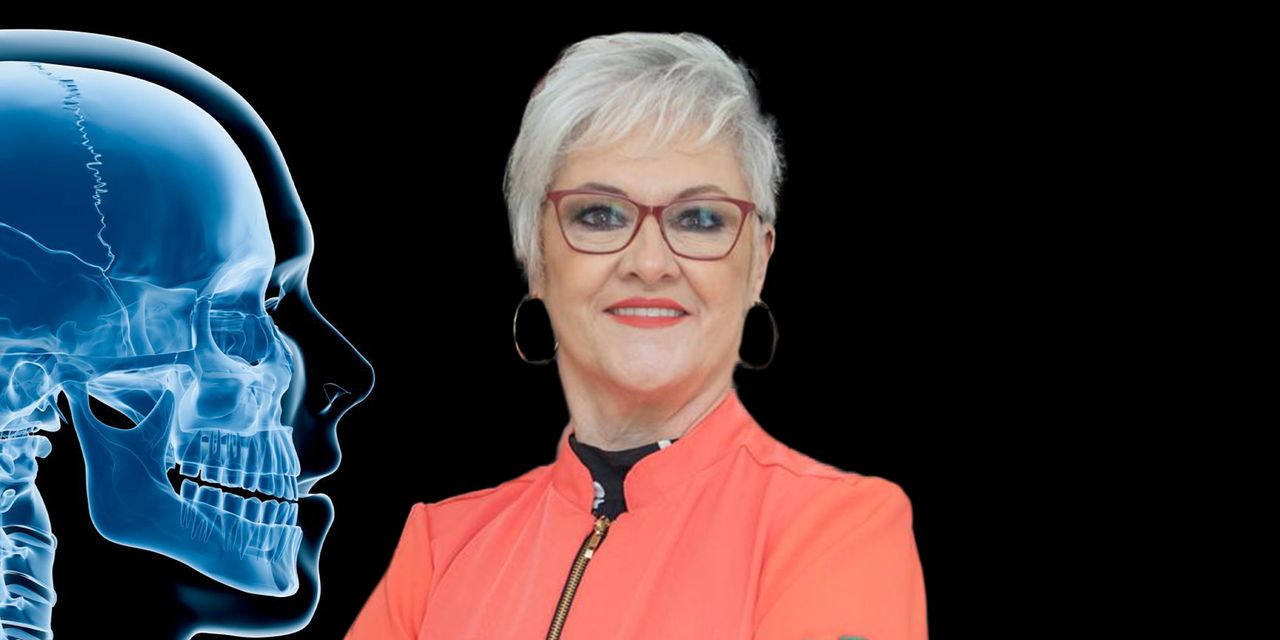
A unique course on jaws functional orthopedics by Patricia Valerio!
Lecturer will share the knowledge she have gained throughout her clinical career.
Here are some of the questions that will be addressed during the course:
– Jaws functional orthopedics concepts and mechanisms
– A functional approach to treatment in various occlusion pathologies
– Detailed analysis of functional appliances: mechanism of action, design, indications for use
– The relationship of the malocclusion with other organs and systems of the body.
The OHI‑S Jaw Functional Orthopedic Immersion course is best for orthodontists, pediatric dentists, oral & maxillofacial surgeons, and prosthodontists who want structured, training in functional jaw orthopedics. It emphasizes evidence‑based protocols for diagnosing and treating skeletal discrepancies, guiding craniofacial growth, and ensuring long‑term functional stability.
👩⚕️ Who Should Enroll
- Orthodontists managing skeletal malocclusions and integrating orthopedic protocols into treatment planning.
- Pediatric dentists treating growing patients where functional jaw orthopedics can guide proper craniofacial development.
- Oral & maxillofacial surgeons collaborating on orthopedic interventions and surgical cases.
- Prosthodontists & restorative dentists rehabilitating patients with occlusal and skeletal imbalances.
- Residents & fellows in orthodontics, pediatric dentistry, or oral surgery seeking immersion in functional orthopedic concepts.
- Dental technicians supporting appliance fabrication for orthopedic treatments.
📚 What You’ll Learn
- Functional jaw orthopedics principles: evidence‑based protocols for growth guidance and skeletal correction.
- Diagnosis & analysis: clinical and radiographic evaluation of jaw discrepancies.
- Appliance therapy: design, selection, and management of orthopedic appliances.
- Interdisciplinary collaboration: combining orthodontics, surgery, and restorative dentistry for comprehensive care.
- Retention strategies: ensuring long‑term stability after orthopedic interventions.
- Case‑based lessons: real examples of functional orthopedic treatments in children and adults.
Topics:
Lesson 1.Jaw functional orthopedics: main concepts
– History of orthopedics
– Aim of Jaw Functional Orthopedics (JFO)
– Founders and representatives of the JFO
– Concepts of shapes and functions
– Orthodontics/orthopedics movements
– Grows theory
– Aspects of JFO
– Proprioception and exteroception
– Concepts of JFO:
– Neural excitation
– Posture changing
– Therapeutic posture changing.
– The main peripheral stimulus:
– Periodontal proprioceptors
– TMJ proprioceptors.
– Concepts of therapeutic posture changing
– Physiological limits to change posture
– Types of using appliances (bioplastic, bioelastic)
– Functional priorities.
Recommended for: Orthodontist, Orthopedist, Gnathologist, General dentist.
Lesson 2.Immersion in fundamentals of Jaw Functional Orthopedics. Introductory lesson
– JFO action mechanisms:
– Muscular bridle (rein) theory
– Individualized clinical approach
– Oral neurophysiology reestablishment.
– Mechanical stimulus sensed by a bone
– Types of ossification
– Histological aspects of bone structure and bone formation
– Aspects of mechanical stimulus:
– Force magnitude
– Deformation types
– Intermittence of stimuli application.
– Types of muscle attachment
– Topography anatomy of maxillofacial area muscles
– Key concepts of neuro-occlusal rehabilitation
– Dr. Planas development laws
– Face embryology
– Planas orthodontics accessories (Equiplan).
Recommended for: Orthodontist, Orthopedist, Gnathologist, General dentist.
Lesson 3.Immersion in fundamentals of Jaw Functional Orthopedics
– JFO action mechanisms:
– Muscular bridle (rein) theory
– Individualized clinical approach
– Oral neurophysiology reestablishment.
– Mechanical stimulus sensed by a bone
– Types of ossification
– Histological aspects of bone structure and bone formation
– Aspects of mechanical stimulus:
– Force magnitude
– Deformation types
– Intermittence of stimuli application.
– Types of muscle attachment
– Topography anatomy of maxillofacial area muscles
– Key concepts of neuro-occlusal rehabilitation
– Dr. Planas development laws
– Face embryology
– Planas orthodontics accessories (Equiplan).
Recommended for: Orthodontist, Orthopedist, Gnathologist, General dentist.
Lesson 4.Treatment of patients with malocclusion: a functional approach
– Functional approach to treatment in conditions of different occlusion (deep, crossbite, class 2)
– A detailed analysis of clinical cases of patients with malocclusion: step-by-step photo protocols, appliances used, long-term results
– Using Equiplan for the treatment of malocclusion
– Physiological abrasion of teeth
– Selective grinding of deciduous teeth
– Options for changing the height of the occlusal plane
– Motivation of patients with malocclusion.
Recommended for: Orthodontist, Orthopedist, Gnathologist, General dentist.
Lesson 5.Functional appliances
– Functional appliances overview: characteristic, indications, clinical cases, long-term results, step-by-step photo- and videoprotocol:
– Simoes Network 1 (SN1)
– Simoes Network 2 (SN2)
– Simoes Network 3 (SN3)
– Simoes Network 4 (SN4)
– Simoes Network 6 (SN6)
– Simoes Network 11 (SN11)
– Planas Indirect Track.
– Types of direction of the banding of the functional appliances spinal arch.
Recommended for: Orthodontist, Orthopedist, Gnathologist, General dentist.
Lesson 6.Planas appliances: characteristics, indications, protocols of use
– Planas Composta Indirect Tracks:
– Characteristic
– Application options
– Indications for using
– Cases and long-term results.
– Special Planas Tracks:
– Characteristic
– Application options
– Indications for using
– Cases and long-term results.
– Functional way to treatment planning
– Clinical cases and long-term results of combined functional approach to the treatment of malocclusion.
Recommended for: Orthodontist, Orthopedist, Gnathologist, General dentist.
Lesson 7.The effectiveness of functional appliances at the cell level
– Concepts of craniofacial growing
– Histological aspects of osteogenesis
– Regulating of blood calcium level
– Mechanical stimuli by cells sense:
– By GAP junctions
– By mechanism similar to synapse
– By mechanism similar to CNS.
– Types of stimuli sensed by bone cells
– Types of ossification
– Mechanism of bone resorption
– Characteristic of bone types
– Topography anatomy of craniofacial area.
Recommended for: Orthodontist, Orthopedist, Gnathologist, General dentist.
Lesson 8.The role of genotype and phenotype in the concept of Jaw Functional Orthopedics
– Oral functions
– Estomatognosia
– Clinical case: treatment of vestibular crossbite by using specific individual functional appliance
– Embryology aspects of craniofacial formation
– Structures derived from neural crest
– The Human Genom Project
– Craniofacial genetics
– Genotype and phenotype
– Polymorphism
– Role of genes in craniofacial grows.
Recommended for: Orthodontist, Orthopedist, Gnathologist, General dentist.
Lesson 9.The relationship between the occlusion and other organs and systems of the body
– Concept of therapeutic interventions with functional treatment of malocclusion
– Sense organs and their relationship with the occlusion:
– Vision and occlusopathy
– Hearing and occlusopathy
– Smelling and occlusopathy
– Gustatory and occlusopathy
– Touch sensitivity and occlusopathy.
– Cranial nerves
– General changes in organism on patients with malocclusion
– Mechanisms of interaction of the bite (occlusion) with other organs and systems
– Interconnection between mouth breathe and malocclusion
– Necessity of early treatment of the malocclusion.
Recommended for: Orthodontist, Orthopedist, Gnathologist, General dentist.
Related products

Orthopedics

Orthopedics