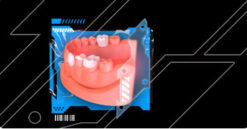
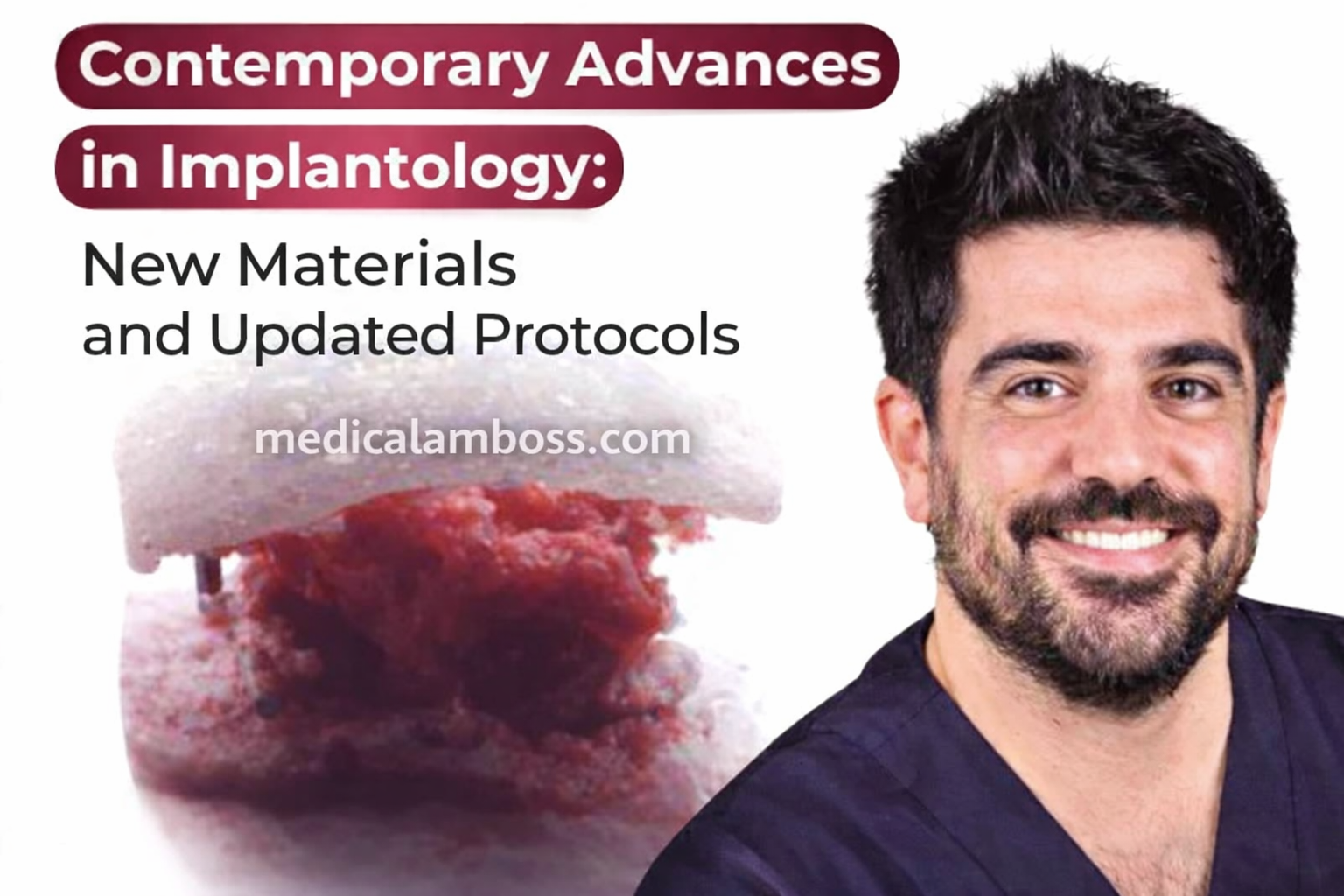
OHI-S Contemporary Advances in Implantology New Materials and Updated Protocols
Include: 6 videos + 6 audios + 6 file sub vtt, size: 2.62 GB
Target Audience: implantologists, oral and maxillofacial surgeons, general dentists
Information:
6 lessons (5h 33min)
ONLY the latest advancements and biomaterial innovations in implantology!
The most up-to-date course on implantology is now available with renowned lecturers from Spain and Italy!
Gain valuable insights and learn in detail about advanced implantology topics, including:
- Tissue level implants for aesthetic tissue rehabilitation
- Protocols of horizontal bone grafting
- Protocols of the split crest technique
- Clinical application of Porcine-Derived biomaterials for sinus augmentation and guided bone regeneration (GBR)
- Biconometric prosthetic concept and navigated implantology.
The OHI‑S Contemporary Advances in Implantology: New Materials and Updated Protocols course is best for oral surgeons, implantologists, prosthodontists, and general dentists who want structured, CE‑accredited training in the latest biomaterials and evidence‑based surgical/restorative protocols in implant dentistry. It is designed to update clinicians on cutting‑edge materials, techniques, and workflows that improve predictability, longevity, and patient outcomes.
Who Should Enroll
- Oral & maxillofacial surgeons performing implant surgeries and bone augmentation procedures.
- Implantologists seeking mastery of new biomaterials and updated surgical/restorative protocols.
- Prosthodontists & restorative dentists integrating advanced implant solutions into functional and aesthetic rehabilitation.
- General dentists expanding their scope into implantology with modern, evidence‑based techniques.
- Dental technicians & lab professionals collaborating on implant prosthetics with new restorative materials.
- Residents, fellows, and trainees in oral surgery, prosthodontics, or implantology needing structured advanced training.
What You’ll Learn
- New biomaterials: latest ceramics, titanium alloys, and regenerative materials for implant success.
- Updated surgical protocols: minimally invasive techniques, immediate placement, and guided surgery workflows.
- Restorative innovations: digital workflows for implant prosthetics, CAD/CAM integration, and full‑arch rehabilitation.
- Regenerative concepts: bone grafting, PRF, and biologically driven approaches for predictable osseointegration.
- Case‑based lessons: clinical examples demonstrating functional stability and aesthetic excellence.
Topics:
Lesson 1.Tissue Level Implants in Aesthetic Implant Dentistry: Strategies and Innovations
- Tissue level implants and their historical background
- Bone level vs. tissue level implants
- Hybrid implants:
- Advantages in treating the aesthetic zone
- Biological rationale behind the use of hybrid implants.
- Post-extractive alveolar bone resorption and its management
- Protocols for 3D placement of tissue level implants in the aesthetic zone
- Protocols for mini-invasive approaches in implant dentistry
- Post-extractive alveolar socket remodeling
- Analysis of clinical cases
- Management of different post-extractive alveolar sockets in various clinical cases.
Recommended for: Implantologists, Oral and maxillofacial surgeons, General dentists.
Lesson 2.Tissue Level Implants in Clinical Everyday Practice
- Protocols for 3D placement of tissue level implants in the aesthetic zone
- Protocols for mini-invasive approaches in implant dentistry
- Post-extractive alveolar socket remodeling
- Analysis of clinical cases:
– Management of different post-extractive alveolar sockets in various clinical cases.
Recommended for: Implantologists, Oral and maxillofacial surgeons, General dentists.
Lesson 3.Horizontal Bone Grafting: New Approaches to Avoid Complications
- Maxillary bone atrophy: Complex regeneration surgeries with high morbidity
- Protocols for the horizontal augmentation technique
- Step-by-step protocols for the split crest technique
- Predictable alternatives to the split crest technique
- Management of severe horizontal atrophy cases and management of long-term and short-term complications
- Analysis of clinical cases.
Recommended for: Implantologists, Oral and maxillofacial surgeons, General dentists.
Lesson 4.Horizontal Bone Grafting with Split Crest Technique
- Step-by-step protocols for the split crest technique
- Predictable alternatives to the split crest technique
- Clinical advantages of the split crest technique
- Rehabilitation options for cases with compromised bone volume
- Analysis of clinical cases.
Recommended for: Implantologists, Oral and maxillofacial surgeons, General dentists.
Lesson 5.Cone Morse Connections, Biconometric Prosthetic Concept, and Dynamic Navigation in Implantology
- Clinical advantages of Cone Morse implants and benefits of employing Biconometry in dental implant procedures
- Simplification of implant procedures with Cone Morse implants and Biconometry
- Analysis of common clinical challenges:
- Implant spacing and vertical implant placement
- Provisional restorations and immediate loading.
- Clinical application of navigation technology to enhance precision and ensure parallelism between implant placements
- Management of edentulous cases using Biconometry and Navigation with immediate loading protocols
- Clinical application of Navident system
- Integrated data analysis and AI assistance for simplified implant planning with Navident
- The use of caps for provisional and definitive Biconometry restorations
- Analysis of clinical cases:
- Application of navigation technology in partial and full edentulous cases
- Bone response to various prosthetic connections.
Recommended for: Implantologists, Oral and maxillofacial surgeons, General dentists.
Lesson 6.Maxillary Sinus Augmentation: Extreme Rehabilitation with Porcine-Derived Biomaterials
- Introduction to new implant macro morphologies designed to enhance primary stability, particularly in cases with limited vertical bone volume
- Innovations in implant dentistry: Zygomatic implants and complex surgical interventions
- Management of edentulous cases:
- Protocols of the biconometry approach
- Navigation techniques
- Immediate loading protocols.
- The role of porcine biomaterials in advanced surgical techniques for extreme rehabilitation
- Analysis of the osteoconductive and osteoinductive properties of porcine-derived biomaterials
- Porcine-derived materials in promoting new bone formation, tissue integration, and accelerating the healing process
- Implant stability quotient and implant insertion torque
- Impact of the implant apex on the sinus membrane
- Relationship between underpreparation and implant stability
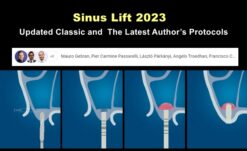
- Application of porcine-derived materials for sinus augmentation
- Analysis of clinical cases: long-term results of sinus augmentation procedures after more than 20 years.