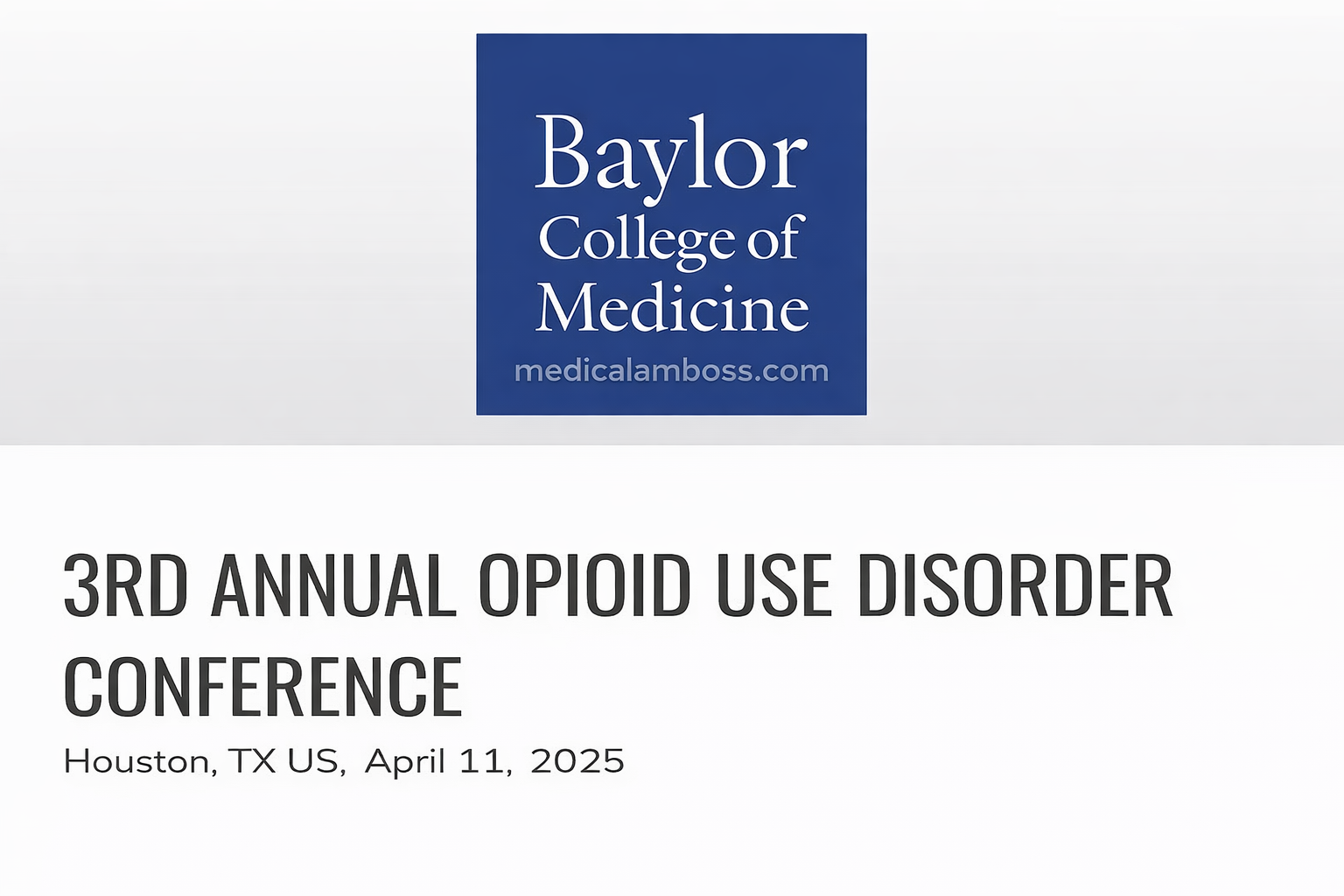
Baylor College of Medicine 3rd Annual Opioid Use Disorder Conference 2025


$10.00
This Product is shared via google drive download link, So please share your correct Gmail id while placing the order .Please note that there are no CME points or certificate associated with this course Samples for Courses Can be found here : Free Samples Here!
Include: 12 videos + 12 audios + 12 file sub vtts, size: 4.96 GB
Baylor College of Medicine 3rd Annual Opioid Use Disorder Conference 2025
Include: 12 videos + 12 audios + 12 file sub vtts, size: 4.96 GB
Target Audience: physicians and advanced-practice providers in psychiatry, emergency medicine, family medicine, internal medicine, and obstetrics and gynecology
Information:
The opioid use epidemic has been at the forefront of societal concerns in the United States. The DEA-MATE act requires all providers to adeptly prescribe and manage Opioid Use Disorder (OUD) and related issues. Treating teams face multiple challenges, including treating chronic pain, preventing over-prescription of opioids, and addressing illicit use. This conference will provide education on evidence-based treatment techniques, including pharmacologic and psychotherapeutic approaches, to manage OUD. Attendees will learn to recognize barriers to accessing medication, apply person-first language, and identify signs and symptoms of opioid use disorder and withdrawal. Additionally, attendees will gain knowledge on how to refer patients to appropriate resources for outpatient care, ultimately empowering them to initiate and/or maintain effective treatments for OUD with confidence.
TARGET AUDIENCE
This activity is for physicians and advanced-practice providers in psychiatry, emergency medicine, family medicine, internal medicine, and obstetrics and gynecology and the community.
EDUCATIONAL OBJECTIVES
At the conclusion of this activity, the participants should be able to:
- Apply treatment techniques, including pharmacologic and psychotherapeutic approaches, in managing Opioid Use Disorder.
- Recognize barriers to accessing medication in treatment of Opioid Use Disorder treatment.
- Recall and apply person first language, emphasizing the individual rather than the diagnosis, when interacting with patients diagnosed with Opioid Use Disorder.
- Identify and appropriately respond to signs and symptoms of opioid use disorder and opioid withdrawal.
Topics:
- 01 A System Lens on Treating Patients with Substance Use Disorders
- 02 To Eliminate Hepatitis C, Treat Those Who Inject Drugs
- 03 Center for Behavioral Emergency and Addiction Research (CBEAR)
- 04 Managing Opioid Withdrawal in the Emergency Department – ED-Initiated Buprenorphine
- 05 What do Buprenorphine Levels Really Tell Us Quantitative Analyses in Relation to Clinical Response
- 06 Co-Occurring Stimulant and Opioid Use Disorders, A Clinical Challenge
- 07 Technology Advances in Substance Use Treatment
- 08 Expansion of Medications for Opioid Use Disorder in Correctional Facilities
- 09 Community-Based, Specialized SUD Treatment for Women and Families
- 10 ADHD, Opioids, and the Family – Protecting Vulnerable Youth
- 11 Implementation of a Tobacco-Free Workplace Program in Opioid Treatment Centers in Texas – Findings and Future Directions
- 12 The Pharmacology of CNS Depressant Polypharmacy That is Bringing Us Down
Related products

Family medicine COURSES
Critical Care - Emergency medicine
Family medicine COURSES
AAFP Family Medicine Board Review Self-Study 15th Edition (Complete HTML) 2022

Critical Care - Emergency medicine

Family medicine COURSES

Critical Care - Emergency medicine
The Brigham Board Review in Infectious Diseases 2021 (VIDEOS)

Family medicine COURSES
The PassMachine Addiction Medicine Board Review 2022 (v3.1) (Beattheboards) (Lectures)
Critical Care - Emergency medicine